Wednesday, September 30, 2015

Paltry Zeal

"We should meditate often upon our future estate in heaven, considering how thankful we will one day be of our zeal, yet how paltry our zeal really is, compared to its gracious issue and the incomparable glories of heaven. We will one day proclaim from heaven that, had we known what God had in store for those who served Him with fervent zeal, we would have heated up our zeal seven times hotter than it was."
Joel Beeke Living Zealously

Tuesday, September 29, 2015

Tuesdays with Timothy #22 A Blameless Pastor

I Timothy 3:2 A bishop then must be blameless, the husband of one wife

A bishop then must be blameless, 
Spurgeon said something along the lines that if you don't have a sermon, you can try the John Gill commentary method, which goes something like "Firstly, the verse does not mean this. Secondly, the text does not mean that. Thirdly, the verse certainly doesn't mean this other thing. In conclusion, the verse speaks of this."


My blog post may be a little like that today, not that I haven't anything to so, but it is sometimes easier to find out what it doesn't mean and deal with what is left. Certainly "blameslessness" cannot mean that a pastor is without sin. There is one one perfect Pastor, and His name is Jesus. The author of this passage also wrote Romans 7. 

This cannot mean that a man cannot be a bishop if, in his life prior to salvation, he lived a life as, well, a sinner. It would be difficult to make this case, as the man who penned the letter was the chief of sinners. 

Also, it can't mean that the pastor never gets blamed or accused. Being accused of wrong doing is pretty much part of the job description of being a pastor. If you have been a pastor for more than two Sunday's, you've been accused of something.

What then, does it mean? The pastor is to be above reproach in his life. He is not to live in unrepentant sin and he is not to live in a way that will bring reproach or shame to the gospel of Christ. When he does sin, he must be quick to make it right between man and God. Paul was in prison. Jesus was crucified. These are shameful things for wrong doers. Jesus was hated, arrested, accused, sentenced, and crucified, dying, despising the shame. However, the life of Jesus was one without reproach, blameless before God. 

the husband of one wife, 
There has been more broken fellowship over this one portion of scripture among Baptist in my lifetime than, perhaps any other verse of scripture. I'm not going to add to the fire that exists, but I will do my best not to wear tap shoes and dance around the issue and "out Fred the nimblest Astaire", so let's just begin by me saying that I believe divorced and remarried men can pastor, and I'm not convinced that this is what Paul had in mind when he penned the letter.  

If you have two wives, you cannot be a pastor. You can only have one wife. Since neither Paul, nor Jesus were married when they pastored, I cannot say that you MUST be a husband of one wife. Since we have this verse and the example of Peter, we dare not say that you cannot be married. I like how the Geneva Study Bible notes say it "Therefore he that shuts out married men from the office of bishops, only because they are married, is antichrist."

There is no law against a widower marrying again. He would not have two wives, since his wife is dead, though she would be his 2nd wife. So we cannot say this verse means that you MUST be the husband of one wife for the entirety of your life. Robertson's Word Pictures (μιας γυναικος — mias gunaikos). One at a time, clearly.

But let's be real..the only reason that this verse is controversial is because of the divorce question. As you study this issue, you will find men who have held that this meant divorce in the early days after the close of the cannon. You will also find men from the same time asserting that this is about polygamy. The commentators too are split, though most of the trusted men I have read come down on the anti-polygamy side of the fence.  Yes, I'm full aware of the ad verecundiam but it is more than a little foolish not to inquire the minds of those who have gone before me. 

I honestly do not think that Paul had divorce in mind here. I believe had the intention been to condemn divorce and remarriage, he would have more explicitly than was done here. When I was a younger man, I thought that this verse refereed to polygamy and I was told that I was being crazy and that couldn't mean that and how unrelevant this verse would be. Fast forward to 2015, and we see that pro-polygamy forces have already pushed to promote the practice. In 25-50 years, churches in the USA will have men come to faith in Christ, who were united in polygamous marriages prior to salvation. 

On a side note, I have known many godly, faithful, men who have been divorced and remarried. I do not and will not break fellowship with a church that differs from me on this. Churches call their own pastors to serve them. If the church feels that a man is not qualified to be a bishop based upon this passage and his marital life, then they are free to call or not call him. That is the point here. These are markers of a man's life. It deals with the man's overall character. There won't be a single man on earth that meets each one of these marks to perfection, and every pastor, will at times, fall short of the high standards laid out here. Every man and every church will give an account before the Saviour on how they have applied the standard. 

Friday, September 25, 2015

Red Badge of Courage by Stephen Crane

I read this as an untested boy and didn't get it. Over 30 years later and a bit of life lived, I not only understand it, but enjoyed his insights, especially how quickly young Henry justified his running away and then became angry with the idea that anyone would question him. Once fear had gotten hold, he saw the danger everywhere and in every place - even where it wasn't. His guilty conscience proved to be a more formidable foe than those he fought against.

Proverbs 28:1 "The wicked flee when no man pursueth: but the righteous are bold as a lion."

Or, a modern proverb:

 "Courage is being scared to death... and saddling up anyway." - John Wayne

Friday, September 18, 2015

Preaching in the Holy Spirit by Albert N. Martin

A good introduction to the subject of the Holy Spirit's role in the preaching of God's Word. Some good and convicting thoughts, to be sure. Refreshing to read a book with a little balance on the Spirit of God - meaning he is by no means Charismatic but does not deny the supernatural element in preaching because it is not one or the other. If you have ever listened to an Al Martin sermon, there is no question as to the authorship. His distinctive voice is clear, even through the printed page. The book was an expanded sermon, so it is a good, quick, primer. Not my favorite book on preaching, but I found it profitable. 

Thursday, September 17, 2015

Two Convictions

"If my readers rise from the perusal with these two convictions enhanced in their souls — that it is grace which makes the preacher, and that nothing is preaching which is not expository of the Scriptures — my work is not in vain."

R.L. Dabney - Sacred Rhetoric

Saturday, September 12, 2015

An Essay on Anger by John Fawcett

This is an excellent book and I highly recommend it. You can read it for free HERE. Really, really good book.

Friday, September 11, 2015

The Road to Character by David Brook - BookReview

This way a very interesting book. I love the premise and agree with much of it. We both want to live in the same society but where I disagree with the book is how to get there. I like that he hopes to get the questions and discussions of virtue and character back into the public square. He does this by defining his terms and then uses biographical sketches in each chapter to flesh his thesis out and then wraps it up nicely in the final chapter.

Our contemporary culture is concerned about, as Brooks puts it, "resume virtues" and really ignores what he calls "eulogy virtues". Resume virtues being college degree, financial achievement, etc. But no one will talk about your masters degree at your funeral. At a eulogy, people talk of honesty, courage, wisdom, etc. He proposes that we have neglected moral character and have devoted ourselves to outward, fleeting success.

He is right and did a great job of not only identifying the problem but also showing how that problem came to pass. This, to me was outstanding portion of the book.  Brooks identifies that man is fallen and broken by sin (yes, he says it is sin and makes the case that our country is far worse off for having "lost" this word) and that if we go within to find our standard of morality and goodness, we make gods of ourselves. He quoted G. K. Chesterton, who once observed that the reality of sin can be seen on a lovely Sunday afternoon when bored and restless children start torturing the cat. Brooks says:
"If you believe that the ultimate oracle is the True Self inside, then of course you become emotivist—you make moral judgments on the basis of the feelings that burble up. Of course you become a relativist. One True Self has no basis to judge or argue with another True Self. Of course you become an individualist, since the ultimate arbiter is the authentic self within and not any community standard or external horizon of significance without. Of course you lose contact with the moral vocabulary that is needed to think about these questions. Of course the inner life becomes more level—instead of inspiring peaks and despairing abysses, ethical decision making is just gentle rolling foothills, nothing to get too hepped up about."
 We focus so much on ourselves, anything that causes pain or uncomfortablness in our lives must be bad. Where, it is in the struggle where we are refined. We have become uncomfortable to face the reality of our own souls. He said "we are to morality what the Victorians were to sex." Which is a great line. Our prudishness in 2015 is directed towards virtue and morality.

But, (this is a book review, so there has to be a but) I think that his rules for character and his humility code do not really miss the boat, but more aptly in the book we get on the wrong boat. Brooks illustrates character by walking us through short biographies of men and women from different walks of life. He uses religious, non-religious alike to show that there are different ways to character. While true, there are different ways to reform the outside of the cup, there is only one way to clean the inside and that is the blood of Christ.  This is why I believe the chapter on Augustine to be one of the best of the book. He pulls no punches here, talking of grace and redemption. Sin and humility. Perhaps by design? I don't know.

There are parts of the book that make me want to buy copies and give them to graduating seniors...and then there are parts where I don't know if I would even recommend it. It is a strange book. Partly because he talks of moral issues that are not tethered to anything. I suppose that is it - virtue and character building must be tethered to something greater, and just saying "something" isn't enough to motivate and move people to action.  I hope some lost soul does not buy the book and get pulled into the legalistic, stoicism that is talked about, but is broken by their inability to do what is necessary and finds the One who lived a perfect life for us and gives us the grace to follow Him. I was thankful that as I realized I will never be as great as the people in the book, that in Christ, I have my identity and my life and my soul are tethered to Him. I have been given His righteousness and stand complete in Him.

Thursday, September 10, 2015

The dreaded fruits of slow anger

"Dr. Watts, in his excellent discourse on the passions, has given the following description of that slow and inveterate anger which is most of all to be dreaded.

"Sometimes it spreads paleness over the countenance; it is silent and sullen, and the angry person goes on from day to day with a gloomy aspect, and a sour and uneasy carriage, averse to speak to the offender, unless it be now and then a word or two of a dark and despiteful meaning. The vicious passion dwells upon the soul, and frets and preys upon the spirits : it inclines the tongue to tease the offender with a re petition of his crime in a sly manner, upon certain seasons and occurrences, and that for weeks and months after the offence, and sometimes for years. This sort of wrath sometimes grows up into settled malice, and is ever contriving revenge and mischief. May divine grace form my heart in a better mold, and deliver me from this vile temper and conduct!"

As we should seldom suffer our anger to be awakened, so the continuance of it should always be very short. The sullen and long continued resentment above described, is as much contrary to the grace of meekness as a sudden fit of rage and fury. And as it is a settled and deliberate passion, the guilt of it is more heinous, and marked with deeper aggravations in the sight of God."

An Essay on Anger by John Fawcett

Wednesday, September 9, 2015

Shall we take no methods to recover?

"How long shall we lie still under our formal complaints of the decay of Christian piety? How long shall we idly see the retirement of warm religion from the hearts and bosoms of its professors? Do we look into the churches of the Lord Jesus, or into our own souls and observe the deadness and dispiritedness that is there to all the parts of real godliness; and are we content, that so it should be? Are we willing to yield to all the lukewarmness and degeneracy that has overspread us? Shall we take no methods to recover and revive? "

Zeal a Virtue, or a Discourse Concerning Sacred Zeal, by John Reynolds, 1716. Copied from Living Zealously by Joel Beeke

Tuesday, September 8, 2015

What were you expecting?

"While we are in this world of sin and disorder, we must meet with provocations : but the frailty of the weak, the omissions of the negligent, the follies of the imprudent, and the levity of the fickle, should not so far ruffle our spirits as to cause us to use rash words, or to break forth into sudden acts of violence."

An Essay on Anger by John Fawcett

Friday, September 4, 2015

John Adams by David McCullough - Marginalia

John Adams by David McCullough

This was a good book. I didn't know much about Adams, other than the basic trivia but I grew to admire him as a man. We could use a John Adams right now. There isn't much about Adam's faith, but from what is there I believe that he may have been a Christian man.

He had a hard time as a politician but he persevered. Adams put the task of governing ahead of personal pleasure, ease, and finances. He had many critics but stayed the course with manly determination. Think about it -- John Adams had a very difficult undertaking as being the first Vice President under George Washington and then the first President after George Washington. Neither proposition would have been easy and took a humble man, one who loved his country more that his pride, to have achieved it. Good book.

Wednesday, September 2, 2015

Word Study

This is and important article to think through and consider especially if you do not know or have a firm grasp on Greek or Hebrew. As with most things, we need to find the balance and not end up in the water on the port or starboard side.

Selah.


Tuesday, September 1, 2015

Tuesday with Timothy #21 A Good Work

I Timothy 3:1 This is a true saying, if a man desire the office of a bishop, he desireth a good work.

This is a true saying,
This is a true saying, so that is always a good thing to know. Not that the Bible isn't true but this is a truth that resonates with Paul as he contemplates the office of elder in the Lord's church. Paul knows experimentally the goodness of the office and affirms this truth from his own life. I knew marriage was good because the Bible said it is good. I knew marriage was good experimentally because I'm married and have experienced its goodness first hand. My experience of this truth doesn't make it true, but I can attest to its truthfulness. 

if a man desire the office of a bishop,
A man's desire is not always in conflict with God's will. I worry that men think that in order to be a pastor, God has to make you miserable and drag you kicking and screaming behind the pulpit. A man should not start preaching or pastoring if he doesn't want to do it because it certainly is not an easy task for the man or his family. You should desire to do the work when you start and not feel forced to keep it up once you get going (I Peter 5:2).  Certainly this should not be looked at lightly but if God has given a man a desire to do a good work, whether he goes with much fear or much excitement, he is going forward with desire that God has put in his heart. As we will see in the coming chapters, that desire will set a fire in the man and cause him to discipline himself for the task. This is not a desire of a young man watching a football game and wishing he was Peyton Manning. This is the desire of a young man that wakes up at 5:00 am to train before school because he is going to be the next Peyton Manning. 

To desire the office is something to be reached for -- a goal to stretch yourself out for the position. It is a higher position than you are currently residing, if you are desiring it. If the ladies didn't like the authority at the end of chapter two, the men can now join their angst because it is at this point we see the office of bishop has authority. To reach up and desire an office of overseer (which is what the word means) tells us that there is authority with the position. In churches that hold to congregational polity (as I believe the Bible teaches) the church member must voluntarily submit themselves to those that are the overseerers of the church. Let's step it back for a moment and consider why the women can't teach. Because of authority. If a woman cannot be pastor because that role gives her authority over men in the church, obviously when a man does take the office of overseerer, he steps into that authoritative office. To call a man to be your pastor is to call a man into a position of authority. 

he desireth a good work.
It really is a good work. It is work though, don't be mistaken about that. It is hard work. And, for this present time, usually a thankless task. But it is a good work. It is a noble work that must be done in faith, knowing that the reward is not in this life, but when the Chief Shepherd appears (I Peter 5:4). Paul doesn't hide the fact that this is a war and if you are going to enter the ministry, it is going to be a battle. God calls a man, I believe, by putting a desire in him to do the good work. However; the desire and longing for pastoral ministry does not mean that a person should be or even can be a pastor just because they want to be. There are two calls in the call to the ministry that I believe are both the work of the Holy Spirit and both must be present. One, the internal call which I believe is God putting into the heart of a man the desire to preach the Word and serve Christ in the church. But the church is not to be subject to a man just because he says he was called into the ministry. I mean...what if he isn't? What if he is lying? What if he had just watched Braveheart and wants to do something different with his life? What if he isn't a he, but a she and she has "heard the call" and desires to preach? That is the ultimate trump card, is it not? A person says "God called me and if you don't recognize my calling, then you are opposing God. Trust me, I didn't eve want to preach, but God made me and you better not go against me because God called me." Well, it doesn't work that way. We are subject to God's Word.

The second calling is what comes in the next verse - the calling of the church to confirm and recognize that calling. The man has a inward desire but the church has a more practical view in discerning the call. Churches would do well to study what God expects of a pastor before they ordain a man or call a man to be their pastor. The church looks at the man and discerns whether or not he fits the bill. In reality, what is supposed to happen is that the church grows her own men to stand up and take over the leadership of the church. 

**Update**
I changed the link to a different article on pastoral statistics. It was the same stats, just from the original source. 

Friday, August 28, 2015

Destroyers of what is

"Eisenhower warned the country against belief in quick fixes. Americans, he said, should never believe that “some spectacular and costly action could become the miraculous solution to all current difficulties.”He warned against human frailty, particularly the temptation to be shortsighted and selfish. He asked his countrymen to “avoid the impulse to live only for today, plundering, for our own ease and convenience, the precious resources of tomorrow.”Echoing the thrifty ethos of his childhood, he reminded the nation that we cannot “mortgage the material assets of our grandchildren without risking the loss also of their political and spiritual heritage.”He warned, most famously, about the undue concentration of power, and the way unchecked power could lead to national ruin. He warned first about the military-industrial complex—“a permanent armaments industry of vast proportions.”He also warned against “a scientific-technological elite,”a powerful network of government-funded experts who might be tempted to take power away from the citizenry. Like the nation’s founders, he built his politics on distrust of what people might do if they have unchecked power. He communicated the sense that in most times, leaders have more to gain from being stewards of what they have inherited than by being destroyers of what is there and creators of something new."

David Brooks - The Road to Character.


I'll have more to say about this book later.

Monday, August 24, 2015

John Calvin on Proof that Scripture is the Word of God

"For it is not to be accounted of no consequence, that, from the first publication of Scripture, so many ages have uniformly concurred in yielding obedience to it, and that, notwithstanding of the many extraordinary attempts which Satan and the whole world have made to oppress and overthrow it, or completely efface it from the memory of men, it has flourished like the palm tree and continued invincible. Though in old times there was scarcely a sophist or orator of any note who did not exert his powers against it, their efforts proved unavailing. The powers of the earth armed themselves for its destruction, but all their attempts vanished into smoke. When thus powerfully assailed on every side, how could it have resisted if it had trusted only to human aid? Nay, its divine origin is more completely established by the fact, that when all human wishes were against it, it advanced by its own energy. Add that it was not a single city or a single nation that concurred in receiving and embracing it. Its authority was recognised as far and as wide as the world extends - various nations who had nothing else in common entering for this purpose into a holy league. ....Again, with what confidence does it become us to subscribe to a doctrine attested and confirmed by the blood of so many saints? They, when once they had embraced it, hesitated not boldly and intrepidly, and even with great alacrity, to meet death in its defense. Being transmitted to us with such an earnest, who of us shall not receive it with firm and unshaken conviction? It is therefore no small proof of the authority of Scripture, that it was sealed with the blood of so many witnesses, especially when it is considered that in bearing testimony to the faith, they met death not with fanatical enthusiasm, (as erring spirits are sometimes wont to do,) but with a firm and constant, yet sober godly zeal. There are other reasons, neither few nor feeble, by which the dignity and majesty of the Scriptures may be not only proved to the pious, but also completely vindicated against the cavils of slanderers. These, however, cannot of themselves produce a firm faith in Scripture until our heavenly Father manifest his presence in it, and thereby secure implicit reverence for it. Then only, therefore, does Scripture suffice to give a saving knowledge of God when its certainty is founded on the inward persuasion of the Holy Spirit. Still the human testimonies which go to confirm it will not be without effect, if they are used in subordination to that chief and highest proof, as secondary helps to our weakness. But it is foolish to attempt to prove to infidels that the Scripture is the Word of God. This it cannot be known to be, except by faith. Justly, therefore, does Augustine remind us, that every man who would have any understanding in such high matters must previously possess piety and mental peace."

John Calvin - The Institutes of Christian Religion 

Friday, August 14, 2015

Say Exactly That


CS Lewis was once asked “How would you suggest a young Christian writer go about developing a style?”

 Lewis responded: "The way for a person to develop a style is" (a) to know exactly what he wants to say, and (b) to be sure he is saying exactly that. The reader, we must remember, does not start by knowing what we mean. If our words are ambiguous, our meaning will escape him. I sometimes think that writing is like driving sheep down a road. If there is any gate open to the left or the right the reader will most certainly go into it."


Thursday, August 13, 2015

Read More Books

There is no magic trick to reading more; you just have to make time. But, you would be surprised how much reading you can accomplish by being intentional about reading. Don't get into the mindset that you need a soft leather chair in the corner of an elegant home library that smells of old books, leather, and pipe tobacco in order to be a "reader". For example, a few years ago, I read the entire Lord of the Rings trilogy on my breaks at work - about 7 minutes a pop. I read one of John Owen's works entirely on the Kindle app on my phone. Any time you have a few minutes, you can read a page or two, if you are prepared and have something to read. When you are going to the doctor, take a book. Instead of staring at the wall or reading a 3 year old Popular Mechanics magazine, you could use the time wisely.

 Or, waking up 15 minutes earlier every day with the dedicated purpose of reading a book that you have always wanted to work through is an exercise well worth the time and effort. Not a morning person? Stay up 15 minutes later - you get the idea. You don't need hours to read more, you just need to do it. 

You can read a lot in just a few minutes a day. John Piper does the math:
Now, I know what you are thinking: I don't have the time or the ability to get anywhere in books like that. So I want to show you something really encouraging. When this was shown to me about four years ago by my pastor, it changed my life. Most of us don't aspire very high in our reading because we don't feel like there is any hope. But listen to this. Suppose you read about 250 words a minute and that you resolve to devote just 15 minutes a day to serious theological reading to deepen your grasp of biblical truth. In one year (365 days) you would read for 5,475 minutes. Multiply that times 250 words per minute and you get 1,368,750 words per year. Now most books have between 300 and 400 words per page. So if we take 350 words per page and divide that into 1,368,750 words per year, we get 3,910 pages per year. This means that at 250 words a minute, 15 minutes a day, you could read about 20 average sized books a year
When I heard that, I went home, analyzed my day, and set aside the 15 minutes just before supper to read Jonathan Edwards' big book, Original Sin. And I did it in a couple of months. Then I turned to something else. I was absolutely elated: reading that I thought never could get done was now getting done in a 15 minute slot that would have been wasted anyway. Therefore, I encourage you, there is hope. Choose some classics that you've always wanted to read (St. Augustine's Confessions, or City of God; John Calvin's Institutes; Martin Luther's Commentary on Galatians, or Bondage of the Will; John Bunyan's Pilgrim's Progress; Jonathan Edwards' Religious Affections; etc.), and set aside 15 minutes, maybe just before you go to sleep, to read. You will not be the same person next year at this time. Your mind will be stretched, your heart enlarged, your zeal more fervent. Above all, you will have grown in wisdom. And it may not be long until someone says of you: "The words of his mouth are as deep waters; the fountain of wisdom is a gushing spring" (Proverbs 18:4).

Don't believe me or him? How long did it take you to read this blog post of now 600+ words?

Tuesday, August 11, 2015

Tuesday with Timothy #20: Because of Eve

1 Timothy  2:9-15  In like manner also, that women adorn themselves in modest apparel, with shamefacedness and sobriety; not with broided hair, or gold, or pearls, or costly array;  But (which becometh women professing godliness) with good works. Let the woman learn in silence with all subjection. But I suffer not a woman to teach, nor to usurp authority over the man, but to be in silence. For Adam was first formed, then Eve.  And Adam was not deceived, but the woman being deceived was in the transgression. Notwithstanding she shall be saved in childbearing, if they continue in faith and charity and holiness with sobriety.

Paul is backing up his reasoning for male leadership from scripture and giving a Biblical reason why there are not to be women preachers in the church and why the women are to be silent in the public worship. It is very interesting where Paul goes to make his point. He doesn't go to the Rabbi's. He doesn't proceed to the Levitical code. He doesn't go to current culture. He doesn't go the the synagogue tradition. He goes to Scripture, namely to Genesis. When Jesus was questioned about marriage, he did the same thing. Interesting how Western culture began to fall when Genesis was replaced with evolutionary thought and how foundational and important a belief in a literal reading of Genesis is. Along those lines, it is really no wonder why people don't like Paul. He believes in headship, he believes in creation and a literal, historical account of Genesis. He preached the exclusivity of Christ and God's sovereignty in salvation - all the things that you are not allowed to talk about if you want to be accepted in pleasant society.

Let's look at what creation has to do with women preachers.

First, God created Adam first, not Eve and this is important. God created Adam to be the head and he created Eve to be a help, suitable to him. Adam was formed out of the earth and Eve out of Adam. This was God's order in creation and God's order in headship. Also notice that this headship is not a result of the fall. It is not part of the curse that wives are to submit to their husbands and that men are to lead the church. God ordained this headship in creation, prior to the fall and said it was good. The headship of Adam over Eve was good. The curse is not headship, but that women do not, without Christs help, like the way God set it up.

As Gary McHale puts it "There was a difference in how the two genders came about. Man is created from the dust of the earth, which links him to the world, while the woman is crated from his side, which links her to the man." Paul makes the same argument when discussing the head covering in I Corinthians 11:12. Geoffrey Thomas notes "In Genesis 2 Adam names the animals, and then he names the woman. First in Genesis 2:23 naming her "woman" which means she was 'taken out of man' and then in Genesis 3:20 Adam names her "Eve' because she would become the mother of all the living." His point? Adam could only give Eve her name if he had the authority to do so. This doesn't belittle the woman, it just means that we have different roles in God's order. Men and women are both made in God's image, both equal before God but different in our God given roles.

God created Adam and Eve for different purposes. Eve's purpose was to be a suitable helper. This doesn't mean inferior, it doesn't me superior - it means suitable. Men and women are different and God has designed these differences to support and compliment one another. In this role, God has put Adam as the head and Eve under his authority. The help is not the head.

Next we see that Adam that was not deceived, but it was Eve and this is also very important.  God had given Adam the responsibility to protect and keep the garden and he failed. Adam rebelled, but he wasn't deceived in the transgression. Adam knew what was happening and did it anyway. Eve was deceived by Satan's words and Satan went after Eve because she was not the one God had created to defend the garden. When Eve heard the words of Satan and decided that his words were more reliable that God's, she went to Adam to tell him the "good news" of a way to become like gods. When she did, she forever disqualified herself and her daughters from the role of proclaiming "thus saith the Lord" in the public worship. Eve's failure was believing and then proclaiming the goodness of Satan's lie. Adam, when he fell, hid behind Eve and said "She gave it to me" but Eve's defense was "I was deceived." Men who sit under women preaching are recreating the scene of the fall - man abdicate his responsibility and hiding behind the women. Eve, lost the ability to stand and be a herald for God's truth and a teacher of God's Word. God delivering the punishment to Adam makes it clear. Gen 3:17  And unto Adam he said, Because thou hast hearkened unto the voice of thy wife, and hast eaten of the tree, of which I commanded thee, saying, Thou shalt not eat of it: cursed is the ground for thy sake; in sorrow shalt thou eat of it all the days of thy life. It was because Adam listened to Eve and ate of the tree that he was cursed. Eve had preached a false gospel and Adam listened and followed, even though he knew better. God had given Adam the responsibility to keep and protect the Garden and with that comes authority. God gave Adam the law. God gave Adam, Eve. And when Satan tempted Eve, he did not step forward and protect - nor did he deliver God's truth. Because of this, women are not to be preachers in the house of God. It is not how God designed it and women preachers recreate the scene of the fall - rebellious and out of order. This is not to say that a man is to never listen to his wife. Only a fool would not heed the counsel of his wife and listen to her - but the man has the responsibility and will stand and fall with what God has said.

(15)  Notwithstanding she shall be saved in childbearing, if they continue in faith and charity and holiness with sobriety.

The last point Paul makes is a blessing and doesn't deal with speaking in God's house but how God is gracious. It was not the seed of Adam that man would be saved, but the seed of the woman. Though Adam brought the curse of sin and death, the woman has the blessing of bringing life into the world. She isn't, as Robertson notes saved by the function of motherhood but saved in the function. God has blessed the church, the woman, and humanity through the great task of childbearing. Women in the church must continue in faith, love, holiness, and sobriety and glory Christ in their role. This is how a woman can serve the Lord in the church, in the place that God put her. It is always best for the church and woman when she serves the church in her God ordained role instead of thinking that we know better than God. Humble submission to Christ and His Word is far more Christ honoring than thinking we know better. If Christ had wanted women preachers, He would have called them to the office. The very fact that a women thinks she should be a preacher and teach of men disqualifies her from being a teacher since she clearly doesn't know as much about the Bible as she thinks she does.

And to end this little series, let's throw in a twist.

Lord bless,
DPN

Monday, August 10, 2015

What a Friend

If you don't know the sad life of the man who wrote What a Friend We Have in Jesus, this article is well worth your time.

A Speaking God

"As preachers of God's Word, we should understand how important and amazing it is that our God is a speaking God. He didn't have to speak, at least not to us. When Adam and Eve sinned against Him in the Garden, He could have let His last words to them—for all eternity—be the curse He pronounced against them. "You are dust, and to dust you shall return," He could have said (Gen. 3: 19). And then silence. God could have left us in darkness and ignorance to live out our days as rebels and to die under His wrath, without ever knowing Him. Understanding that, it is a mark of the most amazing mercy and love that God continued to care for human beings after we rebelled against Him, that He continued to speak to us and to reveal Himself to us, especially in the person of His Son, Jesus."

Preach: Theology Meets Practice 
by Mark Dever  &  Greg Gilbert

Friday, August 7, 2015

None but Christ

"A believer who hath the eyes of his understanding enlightened, his judgment and apprehension is [that] God is the chief good and supreme happiness [is] an interest in God, a conformity to God, the enjoyment of God here and hereafter….As a covetous and an ambitious man, and a man given to carnal pleasure, will go through much difficulty to have their respective desires fulfilled; so will a believing soul suffer the loss of all, so he may win Christ. “None but Christ,”saith an illuminated believer. “Whom have I in heaven but thee, or in the earth I desire in comparison of thee?”There are many good objects in heaven and earth besides thee. There are angels in heaven and saints on earth. But, soul, what are these to thee? Heaven, without thy presence would be no heaven to me. A palace without thee, a crown without thee, cannot satisfy me. But with thee can I be content, though in a poor cottage. With thee I am at liberty in bonds…. [I]f I have thy smiles, I can bear the world’s frowns. If I have spiritual liberty in my soul that I can ascend to thee by faith and have communion with thee, thou shalt choose my portion for me in this world, “for in the multitude of my thoughts within me, thy comforts delight my soul.”This is the esteem a believing soul hath of divine objects. Christ is precious to him, because he seeth him and believeth in him."

Hercules Collins

Devoted to the Service of the Temple: Piety, Persecution, and Ministry in the Writings of Hercules Collins.  Edited by Michael A. G. Haykin & Steve Weaver

Saturday, August 1, 2015

Bunyan's Bible

In the book “The Legacy of the King James Bible” Dr.  Leland Ryken shows how the King James Bible has been a blessing and still is a blessing for all of us English speakers. Though he doesn’t use the KJB, and from what I understand in listening to an interview he gave, hasn’t used it in decades. In fact, he is involved with Crossway and the publication of the ESV. Here is his bio from Wheaton College:
Dr. Ryken has served on Wheaton's faculty since 1968. He has published over thirty books and more than one hundred articles and essays, devoting much of his scholarship to Bible translations and the study of the Bible as literature. He served as Literary Chairman for the English Standard Version (ESV) of the Bible and in 2003 received the distinguished Gutenberg Award for his contributions to education, writing, and the understanding of the Bible.
I thoroughly enjoyed this book. It is actually quite refreshing to read a book from someone that actually appreciates the King James Bible, and isn't ashamed of his appreciation. Even if you don't use or read the KJV, you should at the very least, acknowledge its beauty, longevity, and the impact this version has had upon the English speaking world.

One of the ways Ryken shows the KJV has impacted society is from the realm of literature. The language of the Bible was the language of the people.

This is an excerpt from chapter 13 Early Literary Influence of the King James Bible showing how John Bunyan's writing was influenced by his reading of the Bible.
"Beginning at the end of the seventeenth century and lasting for two centuries, the King James Bible and Bunyan’s Pilgrim’s Progress were the two “best sellers” in evangelical Protestant households. In the popular imagination, these two books were regarded as being cut from the same religious and imaginative cloth. The fact that readers have found these two books a natural pair is more telling than occasional scholarly attempts, grounded in technical stylistic analysis, to show that Bunyan’s style often differs from the KJV. The Victorian literary giant Thomas Babington Macaulay offered the opinion that Bunyan “knew no language but the English, as it was spoken by the common people. He had studied no great model of composition, with the exception…of our noble [KJV] translation of the Bible.” 
It might be expected that as a Puritan Bunyan (1628-1688) would have used the Geneva Bible, but the evidence points to the King James Bible instead. This is easy to establish from the occasional direct Bible quotations in The Pilgrims’ Progress. For example, as Christian is engaged in a life-or-death struggle with Apollyon, he reached for his sword and says, “Rejoice not against me, o mine enemy; when I fall I shall arise.” This is verbatim from Micah 7:8 as found in the KJV, but not the Geneva Bible. In this same paragraph that narrates the battle between Christian and Apollyon, we hear Christian asserting, “Nay, in all these things we are more than conquerors though him that loved us.” This, too, is verbatim from the King James Bible.
“Read anything of [Bunyan], and you will see that it is almost like reading the Bible itself. He had studied our Authorized Version, which will never be bettered, as I judge, till Christ shall come; he had read it till his whole being was saturated with Scripture….Prick him anywhere; and …the very essence of the Bible flows from him. He cannot speak without quoting a text, for his soul is full of the Word of God.” Charles Spurgeon, Autobiography.
Once we know what translation Bunyan used, we can quickly asses how much he owed to the King James Bible. Through the centuries and continuing through modern scholarly editions, it has been customary to print The Pilgrim’s Progress with the marginal notes that identify the biblical source or allusion for a given passage. A glance at such an edition confirms historian Greens’ famous verdict that “so completely has the Bible become Bunyan’s life that one feels its phrases as the natural expression of his thoughts. He has lived in the Bible till its words become his own.”
What all did Bunyan owe to his King James Bible when he came to compose his masterpiece, which he stared to write while imprisoned for nonconformist preaching? Bunyan owes his master image and superstructure – a pilgrimage form this world to the heavenly city—to Hebrews 11:13 and 16: “these all died in faith,…and confessed that they were strangers and pilgrims on the earth…they desire a better country, that is a heavenly…city.”….And as already noted, Bunyan wrote in a biblical idiom as if it were his native language. He himself called this idiom “the language of Canaan.”
The final verdict on Bunyan’s indebtedness to the King James Bible can be give to David Norton, who writes:
The Pilgrim’s Progress, more commonly read by generations that any book but the KJB, helped to form a love for the language of the KJB itself…It is difficult to believe that Bunyan did not contribute to a literary as well as a religious sense of the KJB, and that he did not help show later writers ways they might use it.”

Wednesday, July 29, 2015

Love That Will Not Let Me Go

I haven't blogged much because I've had a lot going on this last year. But God is good and a refuge for the weary soul.


O Love that wilt not let me go,
I rest my weary soul in thee;
I give thee back the life I owe,
That in thine ocean depths its flow
May richer, fuller be.

O light that followest all my way,
I yield my flickering torch to thee;
My heart restores its borrowed ray,
That in thy sunshine’s blaze its day
May brighter, fairer be.

O Joy that seekest me through pain,
I cannot close my heart to thee;
I trace the rainbow through the rain,
And feel the promise is not vain,
That morn shall tearless be.

O Cross that liftest up my head,
I dare not ask to fly from thee;
I lay in dust life’s glory dead,
And from the ground there blossoms red
Life that shall endless be.

 George Matheson,

Tuesday, July 28, 2015

Tuesday with Timothy # 19

1 Timothy 2:11-15 Let the woman learn in silence with all subjection.  But I suffer not a woman to teach, nor to usurp authority over the man, but to be in silence.  For Adam was first formed, then Eve. And Adam was not deceived, but the woman being deceived was in the transgression. Notwithstanding she shall be saved in childbearing, if they continue in faith and charity and holiness with sobriety.

Paul is instructing Timothy in how the church needs to behave in God's house. Having first addressed men in general, Paul turns his attention to the women of the church in public worship. The women members of the church are not to be preachers, they are to listen and learn in subjection. Women cannot be preachers and women cannot be pastors. Not because women don’t have the ability to teach but because it is not their place in God’s designed order. It is not becoming and God did not create women to hold such a position in the church. For a woman to stand up and teach the congregation is to go against the command to learn in silence, the command to be in subjection, the command not usurp authority over the man.  Twice Paul says that the woman is to be in silence.  I don’t apologize if that offends you, but I hope that if it does offend you, that you would prayerfully consider why that would be the case? This is a hard saying for the modern ear, but it doesn’t make it any less true.

This passage also does not mean that a woman can never teach anything to anyone ever or that women can never teach Biblical things. Godly women will be teachers of good things and teach younger women in practical godliness (Titus 2:3-4). Women are to be teachers in the home, training their children in the Word of God. Woman are to be teachers in their circles of influence, where providence has placed them in their day to day lives. Women can be teachers of the ungodly in evangelism just to name a few. The women in John 4 left the well and told the men of the city about Jesus. We are all to instruct each other in the public singing of Psalms, hymns, and spiritual songs (Col 3:16). The arena of teaching to which Paul is instructing Timothy is not in world at large but rather the gathering of God's people in public worship. The reason why women are not to teach comes from the broader issue of women and the created order, but the prohibition against teaching is for the public worship service and how women ought to behave themselves in God's house. Paul's very clear instruction here is regarding public worship and women are not to be teachers. It cannot be more plainly stated. 

Teachers of any sort in any context are given a measure of authority when they teach. Whether it be teaching in the home, on the job site, or in the lecture hall, the teacher will have authority from the platform they have been given to instruct others. I have had to train people in my job and I was given a measure of authority to instruct new employees in business practice. I did not have the power to hire or fire, or give raises or discipline. I did not even have the power to make up my own rules or way of doing things. I was commissioned to train the new hire in company practice.  I did have the authority given by the company to say "this is how you must do your job".  Teachers have an inherent authority because they have (or should have) mastered a subject. When Jesus was called “master" in Matthew 22:36, they were not referring to His Lordship but that is the word for teacher in that context. A teacher is one that has mastered a subject and has been given a platform to teach, and with that comes authority to speak and be heard on a topic.

 When a church calls a person to be their teacher, they are calling an individual into an office and position of authority over those they instruct. Timothy has to rightly divide the Word of truth and pay attention to doctrine – his words carry weight because of the position he holds. As a teacher in God’s house, that office has authority because those that submit themselves to a church are submitting themselves to the teaching of the Word.  Timothy does not have power to change the Word, but he stands before the people to declare what God has said and with that, comes the authority of a man of God that must be listened to. That is also why teachers will be held to a higher standard of by God.

Women usurp this authority given by God to the men of the church by teaching men in the church. For a woman to stand up and preach, she is taking an authority that God did not give to women and putting the men under her in subjection to her Words. Please notice, this is not a men versus women issue. The men in the congregation who are listening to God's Word are also under the authority of the Word preached, not just the women. All people who hear the Word are under its authority. But the tool (the preacher) is to be a man, not a woman. Women preachers usurp the created order by making the man subordinate to the woman's instruction. It is rebellion to have men sit at the feet of a woman to receive instruction from God's Word in God's house, and it shameful when it occurs. There are no two ways about this passage and we may disagree with Paul, but we cannot misunderstand him. Women are not to be set up as preachers or set themselves up as pastors in the church. Period. End of story. No women preachers. If you are thinking "what about Priscilla and Aquila teaching Apollos!" please re-read the second paragraph and try again. And while we are at it, Paul was not talking about Sunday School because there was no such thing as Sunday School. That is another topic for another day. When the church met, they met together, all assembled in one place for public worship so this is what I'm talking about as well - the gathered meeting of God's people for public worship. 

Next time, we’ll see that it has nothing to do with knowledge or ability, value or worth. We live in a culture right now that literally doesn't understand what physically makes a man a man and a woman a woman, so I am not surprised that people do not understand or want to understand roles of men and women.

Monday, July 27, 2015

My Enemy

by
Edwin L. Sabin

An enemy I had, whose mien
I stoutly strove in vain to know;
For hard he dogged my steps, unseen,
Wherever I might go.

My plans he balked; my aims he foiled;
He blocked my every onward way.
When for some lofty goal I toiled,
He grimly said me nay.

"Come forth!" I cried, "Lay bare thy guise!
Thy wretched features I would see."
Yet always to my straining eyes
He dwelt in mystery.

Until one night I held him fast,
The veil from off his form did draw;
I gazed upon his face at last—
And, lo! myself I saw.


(Oh wretched man that I am....DPN)

Monday, July 20, 2015

Neither Out Far Nor Deep

by Robert Frost

The people along the sand
All turn and look one way.
They turn their back on the land.
They look at the sea all day.

As long as it takes to pass
A ship keeps raising its hull;
The wetter ground like glass
Reflects a standing gull.

The land may vary more;
But wherever the truth may be—
The water comes ashore,
And the people look at the sea.

They cannot look out far.
They cannot look in deep.
But when was that ever a bar
To any watch they keep?

Friday, July 17, 2015

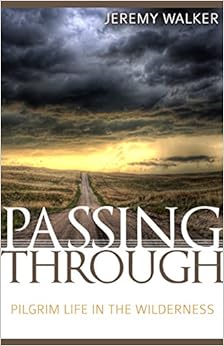
Book Review - Passing Through: Pilgrim Life in the Wilderness by Jeremy Walker

Are you a Pilgrim? If you are a Christian, the answer is yes, you are. Maybe the idea brings to the American mind thoughts of the Mayflower, Thanksgiving, and funny hatted people discovering a new world. Or, perhaps the idea of a person making their way to some far off shrine as the grand object of their worship. Does the idea of a pilgrim put you in mind of a ordinary man or woman, the mechanic, or homeschooling mother? How about a 16 year old high school student trying to decided which college to attend? Perhaps not because, as Jeremy Walker points out in his newest book Passing Through: Pligrim life in the Wilderness, Christians don't think often enough as our identity as travelers. This book is a good corrective to what may be lacking in our times. 
 
We, in the West, have enjoyed the fruits of gospel revival of the past centuries, living in a culture that was shaped by Christian men and women. That advantage is either dead or dying and we are finding ourselves in the precarious position of learning to living like our forefathers lived. We are, as the subtitle suggests, just passing through; travelers on a journey home. This book addresses the reality that this world is not our home - we are on a pilgrimage. We are in this world, but not of this world.

The opening chapters make sure we understand what it means to be a pilgrim and that we stay on the path and don't fall into the ditch of isolationism or the ditch of worldliness. To avoid being worldly, we are tempted to hide in the bunker and separate from everyone and everything. But the opposite extreme is to take in as much as the world as possible, disregarding our Lord's command for holiness. But the true path of the is neither isolationism nor is it worldliness. Not taking for granted that we even understand what the "world" is, Walker helpfully defines his terms, making sure that we are all on the same page before moving on to the next point.

From there, the focus turns to understanding the world in which we really live in and our role in that world as kingdom people. Loving the world means loving that which is hostile to our Lord and our task as pilgrims is to be faithful and keep our eyes on Christ and we navigate through this journey. We are ambassadors, living in hostile territory and our message of peace and the terms of peace are enmity to the human heart. This book helps us to get our mind around this reality and to understand the world in which we are passing through.

This book is readable, but it is not light. Each chapter follows the pattern of the subject being defined and illustrated, then a spiritual framework is given, followed up by summary thoughts, so each chapter's subject is thoroughly deal with. Full of pastoral application I believe Christians who are unfamiliar with the idea of pilgrim life or Christians who are not struggling with the thoughts of living in an hostile, anti-Christian society, will be helped and encouraged.

 Christians have a King, we have a citizenship in Heaven, and we have a mission and this book helps us to get our bearings, who we are, where we are, were we are going, and what we have to do. 

You can listen to an interview on the book both HERE and another one HERE.

You can buy the book HERE (among many other places).

My thanks to Cross Focused Reviews for the review copy. 


Monday, July 13, 2015

Awake, my soul

Another tip of the hat to Barry Smith for sending this along. By the way, if you have any suggestions for topics to address or poems you enjoy let me know in the comments or email me. Help is always welcome!

Awake, my soul, to joyful lays,
And sing thy great Redeemer’s praise;
He justly claims a song from me -
His lovingkindness, O how free!
Lovingkindness, lovingkindness,
His lovingkindness, O how free!

He saw me ruined in the fall,
Yet loved me notwithstanding all;
He saved me from my lost estate -
His lovingkindness, O how great!
Lovingkindness, lovingkindness,
His lovingkindness, O how great!

Though numerous hosts of mighty foes,
Though earth and hell my way oppose,
He safely leads my soul along -
His lovingkindness, O how strong!
Lovingkindness, lovingkindness,
His lovingkindness, O how strong!

When trouble, like a gloomy cloud,
Has gathered thick and thundered loud,
He near my soul has always stood -
His lovingkindness, O how good!
Lovingkindness, lovingkindness,
His lovingkindness, O how good!

Often I feel my sinful heart
Prone from my Jesus to depart;
But though I have him oft forgot,
His lovingkindness changes not.
Lovingkindness, lovingkindness,
His lovingkindness changes not.

Soon I shall pass the gloomy vale,
Soon all my mortal powers must fail;
O! may my last expiring breath
His lovingkindness sing in death.
Lovingkindness, lovingkindness,
His lovingkindness sing in death.

Then let me mount and soar away
To the bright world of endless day;
And sing with raptures and surprise,
His lovingkindness in the skies.
Lovingkindness, lovingkindness,
His lovingkindness in the skies.

Words: Sam­u­el Med­ley, in J. H. Mey­er’s Col­lect­ion of Hymns for La­dy Hunt­ing­don’s Cha­pel (Lon­don: 1782).

Tuesday, June 30, 2015

Probably would deserve it

“If our forefathers who were godly and holy and maintained a strict walk with God were alive again, they would spit in the faces of many who think themselves eminent professors of religion, because of the looseness of their conversations [carelessness of their conduct]. And this is the worst, that they can all put it upon Christ and the doctrine of Christ.” Jeremiah Burroughs, Gospel Conversation copied from Jeremy Walker's book Passing Through

Monday, June 22, 2015

Wedding Hymn

By Sidney Lanier

Thou God, whose high, eternal Love
Is the only blue sky of our life,
Clear all the Heaven that bends above
The life-road of this man and wife.
May these two lives be but one note
In the world’s strange-sounding harmony,
Whose sacred music e’er shall float
Through every discord up to Thee.

As when from separate stars two beams
Unite to form one tender ray:
As when two sweet but shadowy dreams
Explain each other in the day:
So may these two dear hearts one light
Emit, and each interpret each.

Let an angel come and dwell tonight
In this dear double-heart, and teach.

Wednesday, June 17, 2015

A Properly Framed Life

Be Content 

"The last thing to be observed is, that the Lord enjoins every one of us, in all the actions of life, to have respect to our own calling. He knows the boiling restlessness of the human mind, the fickleness with which it is borne hither and thither, its eagerness to hold opposites at one time in its grasp, its ambition. Therefore, lest all things should be thrown into confusion by our folly and rashness, he has assigned distinct duties to each in the different modes of life. And that no one may presume to overstep his proper limits, he has distinguished the different modes of life by the name of callings. Every man’s mode of life, therefore, is a kind of station assigned him by the Lord, that he may not be always driven about at random. ...in every thing the call of the Lord is the foundation and beginning of right action. He who does not act with reference to it will never, in the discharge of duty, keep the right path. He will sometimes be able, perhaps, to give the semblance of something laudable, but whatever it may be in the sight of man, it will be rejected before the throne of God; and besides, there will be no harmony in the different parts of his life. Hence, he only who directs his life to this end will have it properly framed; because free from the impulse of rashness, he will not attempt more than his calling justifies, knowing that it is unlawful to overleap the prescribed bounds. He who is obscure will not decline to cultivate a private life, that he may not desert the post at which God has placed him. Again, in all our cares, toils, annoyances, and other burdens, it will be no small alleviation to know that all these are under the superintendence of God. The magistrate will more willingly perform his office, and the father of a family confine himself to his proper sphere. Every one in his particular mode of life will, without repining, suffer its inconveniences, cares, uneasiness, and anxiety, persuaded that God has laid on the burden. This, too, will afford admirable consolation, that in following your proper calling, no work will be so mean and sordid as not to have a splendour and value in the eye of God."

John Calvin, On the Christian Life

HT: Tim Bayly 

Monday, June 15, 2015

The Owl-Critic

By: James Thomas Fields

"Who stuffed that white owl?"
No one spoke in the shop,
The barber was busy, and he couldn't stop;
The customers, waiting their turns, were all reading
The "Daily," the "Herald," the "Post," little heeding
The young man who blurted out such a blunt question;
Not one raised a head, or even made a suggestion;
And the barber kept on shaving.

"Don't you see, Mr. Brown,"
Cried the youth, with a frown,
"How wrong the whole thing is,
How preposterous each wing is,
How flattened the head is, how jammed down the neck is --
In short, the whole owl, what an ignorant wreck 't is!
I make no apology;
I've learned owl-eology.

I've passed days and nights in a hundred collections,
And cannot be blinded to any deflections
Arising from unskilful fingers that fail
To stuff a bird right, from his beak to his tail.
Mister Brown! Mr. Brown!
Do take that bird down,
Or you'll soon be the laughingstock all over town!"
And the barber kept on shaving.

"I've studied owls,
And other night-fowls,
And I tell you
What I know to be true;
An owl cannot roost
With his limbs so unloosed;
No owl in this world
Ever had his claws curled,
Ever had his legs slanted,
Ever had his bill canted,
Ever had his neck screwed
Into that attitude.
He cant do it, because
'Tis against all bird-laws.

Anatomy teaches,
Ornithology preaches,
An owl has a toe
That can't turn out so!
I've made the white owl my study for years,
And to see such a job almost moves me to tears!
Mr. Brown, I'm amazed
You should be so gone crazed
As to put up a bird
In that posture absurd!
To look at that owl really brings on a dizziness;
The man who stuffed him don't half know his business!"
And the barber kept shaving.

"Examine those eyes
I'm filled with surprise
Taxidermists should pass
Off on you such poor glass;
So unnatural they seem
They'd make Audubon scream,
And John Burroughs laugh
To encounter such chaff.
Do take that bird down;
Have him stuffed again, Brown!"
And the barber kept on shaving!

"With some sawdust and bark
I could stuff in the dark
An owl better than that.
I could make an old hat
Look more like an owl
Than that horrid fowl,
Stuck up there so stiff like a side of coarse leather.
In fact, about him there's not one natural feather."
Just then, with a wink and a sly normal lurch,

The owl, very gravely, got down from his perch,
Walked around, and regarded his fault-finding critic
(Who thought he was stuffed) with a glance analytic,
And then fairly hooted, as if he should say:
"Your learning's at fault this time, anyway:
Don't waste it again on a live bird, I pray.
I'm an owl; you're another. Sir Critic, good day!"
And the barber kept on shaving.

Thursday, June 11, 2015

Christ-Haunted

“Whenever I'm asked why Southern writers particularly have a penchant for writing about freaks, I say it is because we are still able to recognize one. To be able to recognize a freak, you have to have some conception of the whole man, and in the South the general conception of man is still, in the main, theological. That is a large statement, and it is dangerous to make it, for almost anything you say about Southern belief can be denied in the next breath with equal propriety. But approaching the subject from the standpoint of the writer, I think it is safe to say that while the South is hardly Christ-centered, it is most certainly Christ-haunted. The Southerner, who isn't convinced of it, is very much afraid that he may have been formed in the image and likeness of God. Ghosts can be very fierce and instructive. They cast strange shadows, particularly in our literature. In any case, it is when the freak can be sensed as a figure for our essential displacement that he attains some depth in literature.”

 Flannery O'Connor, Mystery and Manners

Tuesday, June 9, 2015

The second half is as true as the first

Tuesday with Timothy # 18
I Timothy 2:11-12  Let the woman learn in silence with all subjection. But I suffer not a woman to teach, nor to usurp authority over the man, but to be in silence.
The church is not to be segregated but we also see that the church is not without order. Nothing could be as clear as to what this passage is saying, except perhaps I Corinthians 14:33-35. Only those with an agenda or those who care little for what Paul has to say on the subject can offer an objection to the clear teaching found in these passages. It is an authority issue, and not the kind you are probably thinking. It is authority of the Word of God and whether or not we will we listen and obey. B.B Warfield said "We may like what Paul says, or we may not like it. We may be willing to do what he commands, or we may not be willing to do it. But there is no room for doubt of what he says."
As we saw last time, the first half said women are to learn, the second half of the verse is as true as the first.

There are two negative commands, i.e., prohibitions.
There are three positive commands, something to be done. All five deal with the same topic at hand, the woman's place in the church.

First, let's look at the positive commands.

  • Woman are to learn.
  • Women are to be silent (commanded twice, once in each verse).
  • Women are to be in subjection.
The negative prohibitions are:

  • The woman is not to teach.
  • The woman is not to usurp authority over the man.


That is the plain facts of the text. You can have a Greek study until you are making Moussaka all night or at the very least, μέχρι τις αγελάδες έρχονται σπίτι... but there is no place for a woman preacher in God's House, nor is there any place for a woman to usurp men in God's house, not in any language. There is a kind of study that seeks to understand what the author was saying, which is good. There is also a kind of study that seeks to muddy the waters so much that who knows what anyone is saying anymore.

Since blogging is a hobby of mine, not a job, I'll come back again and look a little closer at the text and go ahead and answer some of the objections that I anticipate.

Monday, June 8, 2015

A Confession

By - CS Lewis

I am so coarse, the things the poets see
Are obstinately invisible to me.
For twenty years I’ve stared my level best
To see if evening -- any evening - would suggest
A patient etherized upon a table;
In vain. I simply wasn't able.
To me each evening looked far more
Like the departure from a silent, yet a crowded, shore
of a ship whose freight was everything, leaving behind
Gracefully, finally, without farewells, marooned mankind.

Red dawn behind a hedgerow in the east,
Never, for me, resembled in the least
A chilblain on the cocktail-shaker's nose;
Waterfalls don't remind me of torn underclothes,
Nor glaciers of tin-cans. I've never known
The moon look like a hump-backed crone--
Rather, a prodigy, even now
Not naturalized, a riddle glaring from the Cyclops’s brow
Of the cold world, reminding me on what a place
I crawl and cling, a planet with no bulwarks, out in space.

Never the white sun of the wintriest day
Struck me as un crachat d'estaminet.
I'm like that odd man Wordsworth knew, to whom
A primrose was a yellow primrose, one whose doom
Keeps him forever in the list of dunces,
Compelled to live on stock responses,
Making the poor best that I can
Of dull things...peacocks, honey, the Great Wall, Aldebaran,
Sliver weirs, new-cut grass, wave on the beach, hard gem,
The shapes of horse and woman, Athens, Troy, Jerusalem

Thursday, June 4, 2015

So much for resolutions

In the book  John Adams by David McCullough, we have an interesting journal entry from a young John Adams. I think we can all identify with a willing spirit and a weak flesh.

"He vowed to read more seriously. He vowed to quit chewing tobacco. On July 21st 1756 he wrote' I am resolved to rise with the sun and study Scriptures on Thursday, Friday, Saturday, and Sunday mornings, and to study some Latin author the other three mornings. Noons and nights, I intend to read English authors. I will rouse up my mind and fix my attention. I will stand collected within myself and think upon what I read and what I see. I will strive with all my soul to be something more than persons who have had less advantages than myself.' 
But, the next morning he slept until 7, and a one line entry [in his journal] the following week read 'A very rainy day. Dreamed away the time.'
I think he turned out alright. You could do worse than being President of the United States.

Tuesday, June 2, 2015

Let the Women Learn

Tuesday with Timothy # 17

1 Timothy 2:11 Let the woman learn in silence with all subjection.

The first part of the text is as neglected as the third stanza of a Baptist hymnal because of the attention the latter part of the verse receives. The passage begins with a divine commandment of action, not a prohibition. This imperative differs Christianity from the cultures throughout the ages. We have a command that women are to learn. As I have said before, Christianity is the greatest blessing to women the world has ever known. We have in the opening verses and divine command upon the house of God, that all of God's people are come to learn of Him. God's people are to hear and to learn God's Word through the proclamation of divine truth. All of God's people are to be in the house of God to learn the Word of God. 

The Bible does not give categories of theology that only certain people should learn certain subjects. Let everyone of God's people be learned in the doctrines of God's Word. Christian people should desire to learn of their God. Perhaps part of the problem is we have got to the place that the only reason there is to learn of God is to be have enough fodder to choke out a sermon for Sunday. We say that theology is for the preacher so he can craft his homilies while the church members come and be entertained and vote in business meetings. No, God would have all His people actively learning of Him. Theology is necessary for all of God’s people to live and walk in the Spirit.

Women are not to be regulated to the kitchen during the church service or off to do other duties while the Word of God is being preached - but they should be among the congregation learning of their God.  It is theology that will make a good wife and a good mother and a godly lady. How can you raise up a child in the fear of the Lord if you do not learn more of God and more of the truth of mankind? Only by being grounded in Biblical theology does a parent have the ability to know that Little Susie is not a spotless petal of perfection with a heart pure as the driven snow but has inherited a guilty and depraved sin nature. It is through theology that a woman can understand her children's true nature and to deal in a godly way. How can a woman understand her calling as a godly wife, except she know it from God's own word?  But even further, to understand and know the Word of God enables God's people, to live, to worship, to pray, to serve -- all to the glory of God. Is it only certain members of the body of Christ need to understand what it is to be in Christ? Is comfort only to be found in imputed righteousness equaled by testosterone levels? I think not. Let the women learn, and not just "women's issues" but theology. 

 The temptation is for women to learn to trust their feelings and emotions rather to learn solid truths. That is why Sarah Young's abominable book Jesus Calling is so popular.  It causes women to doubt that God's Word is enough or God's Word doesn't have a place for their lives and look for God within. Many times, books written for women's studies play upon the emotion and direct women to "hear from God" outside of God's Word. This is the same tactic that Satan used with Eve, to go outside of the revealed Word and look for something else, something you are missing, something...better. The greatest thing a church can do is to tear down the barriers of separation in the learning process of the congregation. Man or women, boy or girl, all should come to God's house to learn of God. God’s way is for the whole congregation to come together and hear God’s Word preached together and sit and learn together. We are a body, after all. 

Let the women learn.

Sunday, May 31, 2015

Helps our Infirmities

On Sunday evenings, we have been working our way through the book of Ephesians. We are currently in chapter four, verse 29 and have, for the last several weeks used this verse to do a study on the person of the Holy Spirit. Tonight, we looked at the Holy Spirit and His ministry of intercession from Romans 8: 26-27. The first part of that verse says "Likewise the Spirit also helpeth our infirmities." Help. Not take away. Help, not remove completely. But the Spirit helps. He comes along side to help us through the trial.

We have the infirmities of sin, to which Christ died for and we have the infirmities of suffering, to which the Spirit helps, so no matter our infirmity God has either already dealt with it or will help us through it.  God does not always deliver us from suffering in this life, but God will not forsake us in the fire. God may not remove all suffering, but God will not remove us from His love. The Spirit does not remove the trial, but the Spirit comes beside us in our infirmities to help us. The Spirit does not lift us above the infirmities, but helps us to push and persevere. Glorious, comforting truth.

       Octavius Winslow said     "Approaching, He takes hold of the burden. Constrained by a love which no thought can conceive, moved by a tenderness no tongue can describe, he advances, and places the power of his Godhead beneath the pressure -- and thus he helps our infirmity..Whether it be the groaning from a pressure of sin, or from a sense of desire, or from a conviction of want, or from the smiting hand of God himself, that groaning ascends to heaven, and bears to the throne of the Eternal, whose ear bends to the softest whisper, and hearkens to the gentlest sigh of his child, a confession, or a request, which shall not be unheard, unheeded, or forgotten."....."Himself took our infirmities and bare our sickness....That very infirmity, which now bows you to the earth, by reason of which you can in no wise lift up yourself, your Saviour bore. It bowed him to the dust, and brought the crimson drops to his brow. "

Tuesday, May 26, 2015

Modest Apparel

Tuesday with Timothy #16
No, I have not forgotten about the series....

1Timothy 2:9-10  In like manner also, that women adorn themselves in modest apparel, with shamefacedness and sobriety; not with broided hair, or gold, or pearls, or costly array; But (which becometh women professing godliness) with good works. 

 In like manner  referring back to the men of the church who are to lead in prayer, the women of the church have their own role to perform in public worship. It amazes me that Christianity is the favorite punching bag for women's groups. "Down with patriarchy" and so forth. It is Christianity that views women as made in the image of God. It is Christianity that has lifted women up through the centuries. It is Christianity that sees women as God's child in Christ, not as property. It is Christianity that sees dignity in all human beings, not just men and not just the powerful. It is absurd to even have to defend this proposition. Are there, I believe the technical term being kunckleheads, in Christianity who wrest the scripture to take advantage of women? Certainly. Does that destroy the truth of God's created order and what the text actually says? Absolutely not. In fact, it is the women's liberation movement that has done far more harm than good.  As G.K. Chesterton said “Ten thousand women marched through the streets shouting, 'We will not be dictated to,' and went off and became stenographers.” His point is not that women are not to labor, but that the heart of the issue of feminism is rebellion against God's order and rebellion against God's order will not put you in a better position in the end. The feminist movement is ultimately self destructive. The heart of the women's liberation movement was to liberate women from who God had made them to be, and when you leave God's created order, you will not find peace. Douglas Wilson well said " We started by employing feminism to turn first rate women into third rate men, and recently we have found ourselves turning third rate women into fifth rate men. And we are rapidly approaching the nadir, where a woman’s highest achievement will be considered as matching the worst behavior of male slobs everywhere."

Women are to adorn themselves in modest apparel. What is modest? Modest is that which is becoming a Christian lady. I love the Scripture, it is amazing to me how wonderful God's Word is in this general statement. The legalist in all of us would want Paul to say "Here is what you are supposed to wear, put it on." That would be easy. That is what you find in Islam and why you also see people stuck in a culture that ended hundreds of years ago. God's Word gives us the principle for godly dress and then the child of God must take these principles and apply them to the culture they live in and the day they live. Morality does not change, and the culture does not dictate right and wrong, but modesty is not stuck in a particular year and a particular culture. Every generation, every culture, has their standard of fashion, and in every culture, woman can dress in modest apparel without wearing a uniform. 

With shamefacedness and sobriety, or with a modest and serious minded heart, she is to dress herself for public worship. Not with broided hair, or decked with jewels but come with good works, which is becoming a godly woman. What is the principle? Is it wrong for a woman to fix her hair and to have jewelry?No - the prohibition is outlining modest apparel for us, not making a list. Being "Shamefaced and sober" is an attitude of the heart. It is the idea of bashfulness, or a regard for others. It is a self control that willingly does not want to be seen and it is with that attitude, the female members of the congregation should come to God's house. They are to come, not wanting to draw attention to themselves, and draw attention to their outward appearance, but to come in a manner of good works that Christ may be seen. It is the heart informing the closet. The attitude informs the dress.

One error is to dress in such a way as to bring attention to yourself, but the other error will have a rule for what is acceptable dress and as long as you meet that mark, there is no need to think about it anymore. Both errors are wrong because neither one gives any prayerful consideration to God's Word. If the heart does not inform the closet, then you will have women wearing modest apparel while acting immodestly. That is just as wrong as wearing immodest clothing. Women in the church are encouraged to have a meek and quiet spirit and dress accordingly.